
White pail of radiative cooling paint for metal surfaces
Other Products
Passive Radiative Cooling Coating for Metal and Buildings
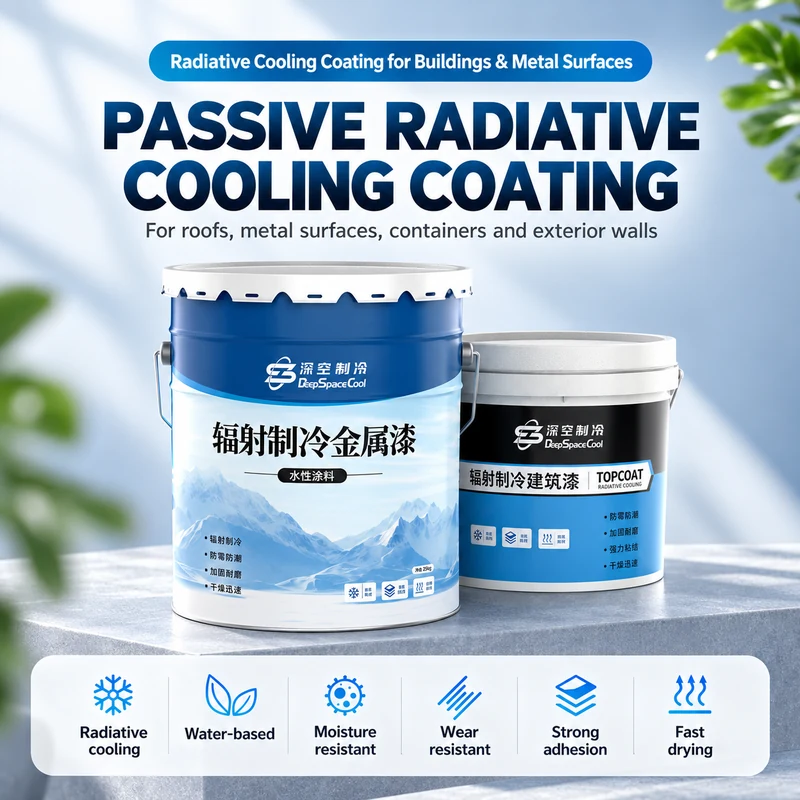
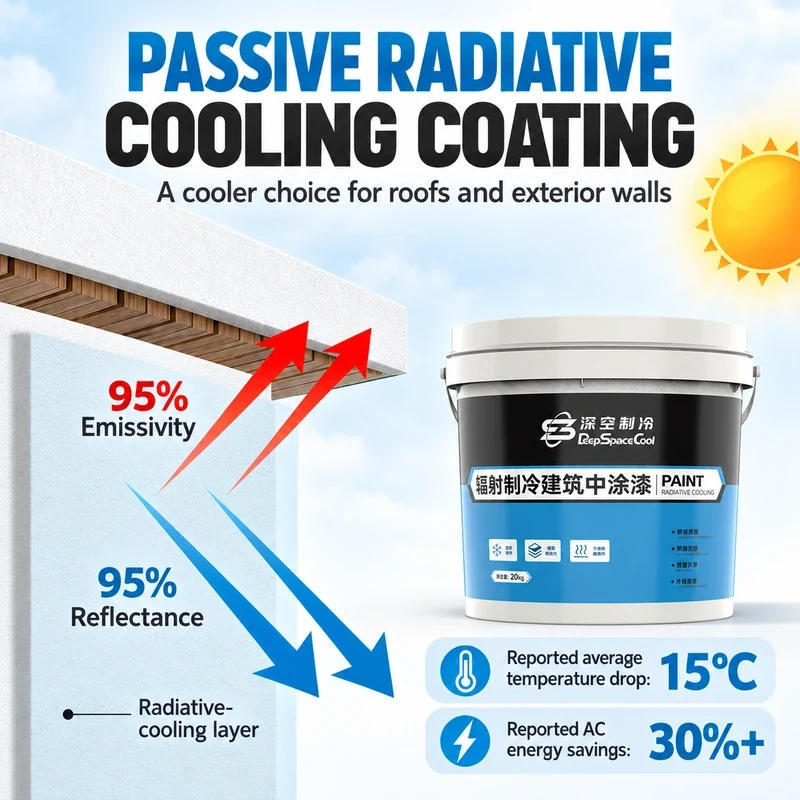
A white, water-based coating for reducing solar heat gain on suitable roofs, metal enclosures and building surfaces. It reflects incoming sunlight and emits heat as infrared radiation, providing a passive surface-cooling function without operating electricity.
- Colour
- White
- Reference surface drying
- 2–3 hours at room temperature
Surfaces & applications
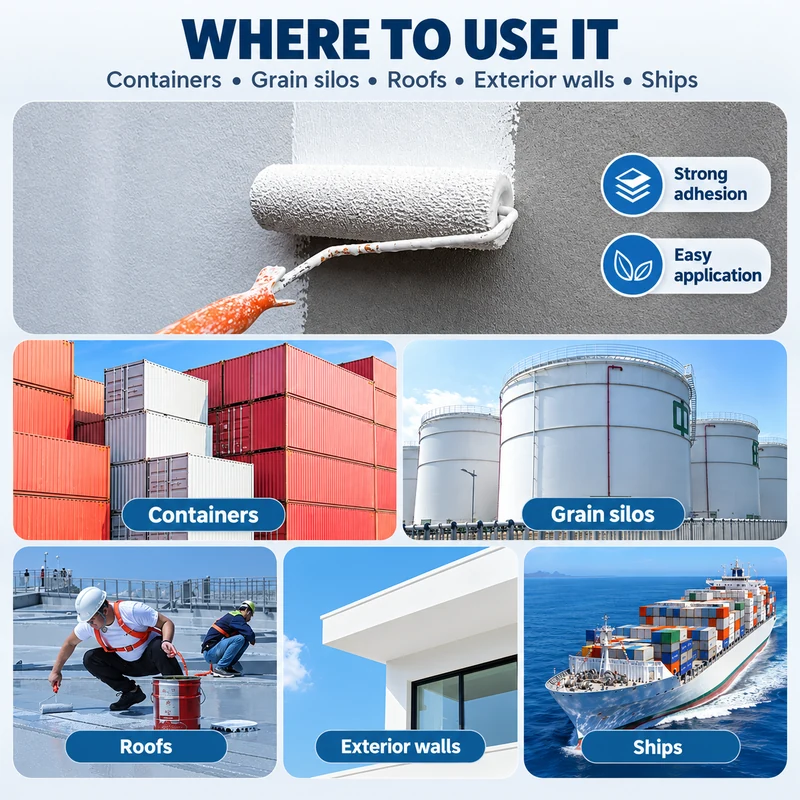
Metal and concrete roofs; containers; grain silos; exterior walls; exposed building and industrial enclosure surfaces
Passive cooling at the exposed surface
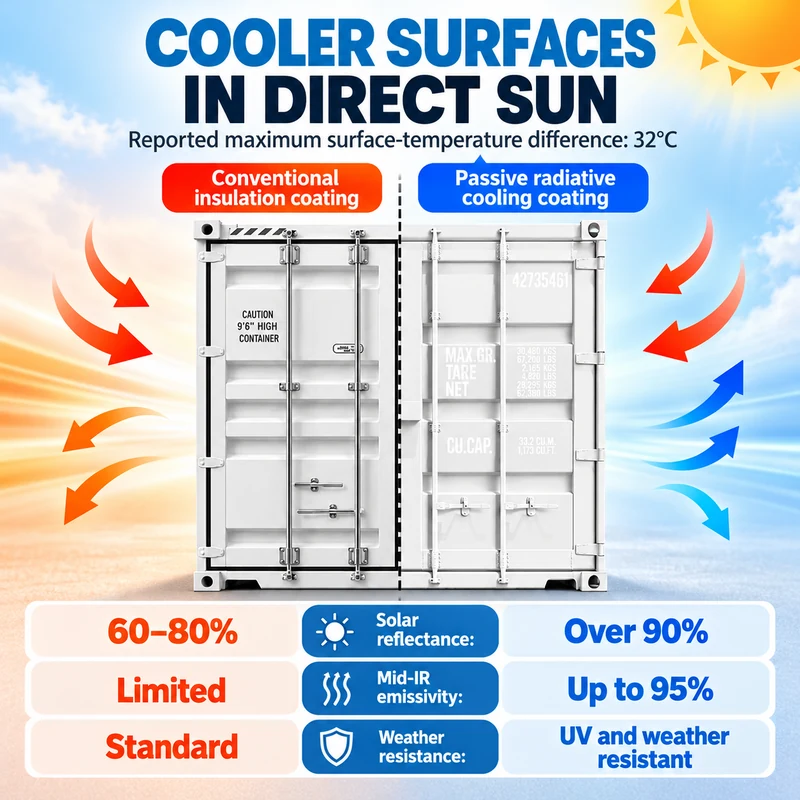
The coating works by limiting solar heat absorption and radiating heat outward. It does not require electricity to perform this surface function. The effect on indoor temperature or energy use depends on roof construction, insulation, ventilation, climate and the operating pattern of the building.
Match the system to metal or masonry
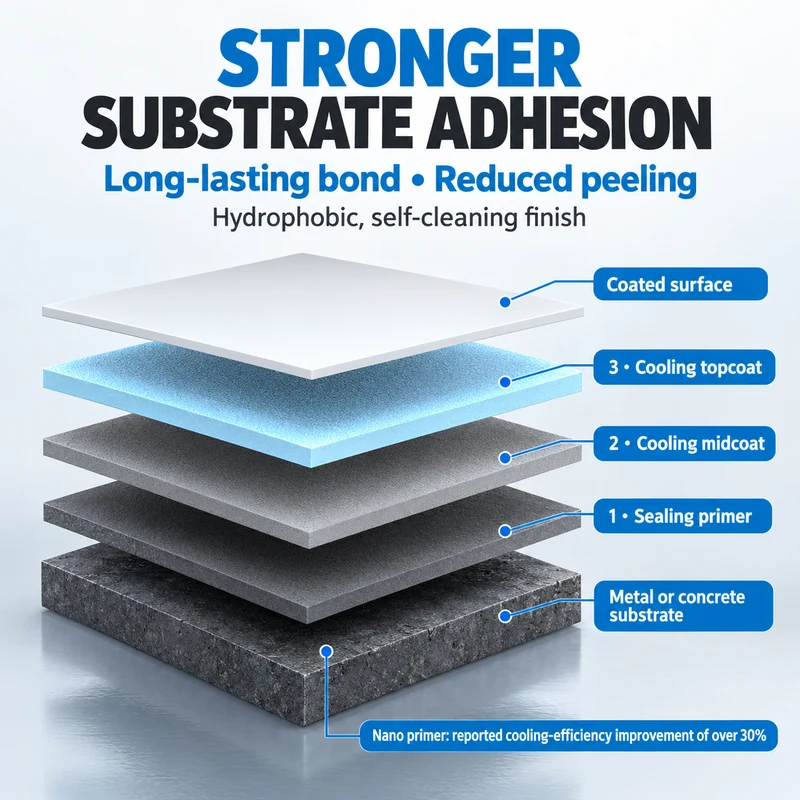
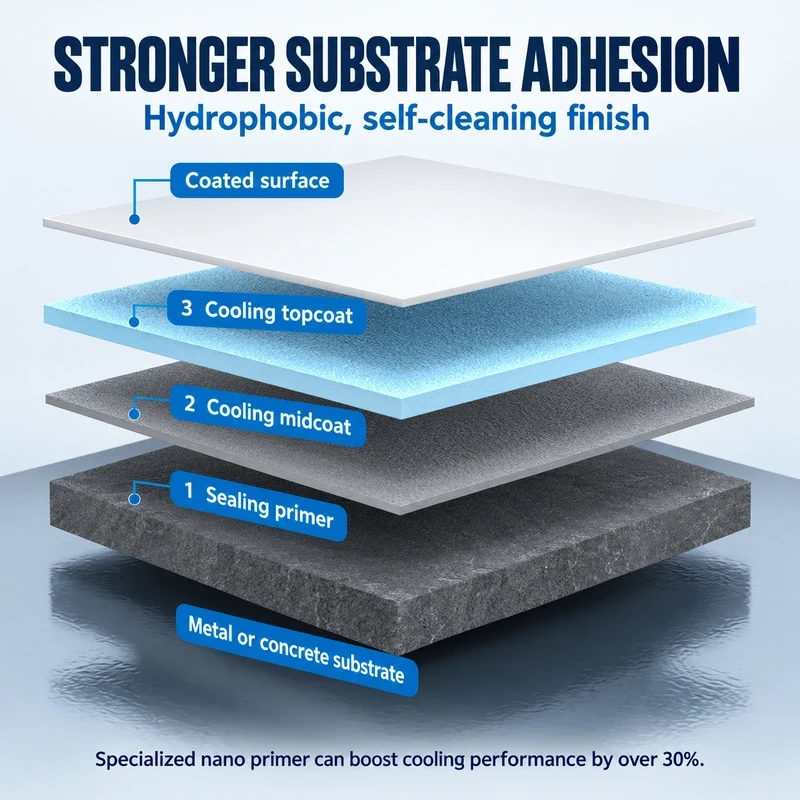
Suitable projects include metal roofs, concrete roofs, containers, grain silos and external walls. Prepare and repair the substrate before coating. The illustrated system includes a sealing primer, cooling layer and weather-resistant topcoat. Steel in a corrosive environment may also need a compatible anti-corrosion primer.
Understand the temperature comparisons
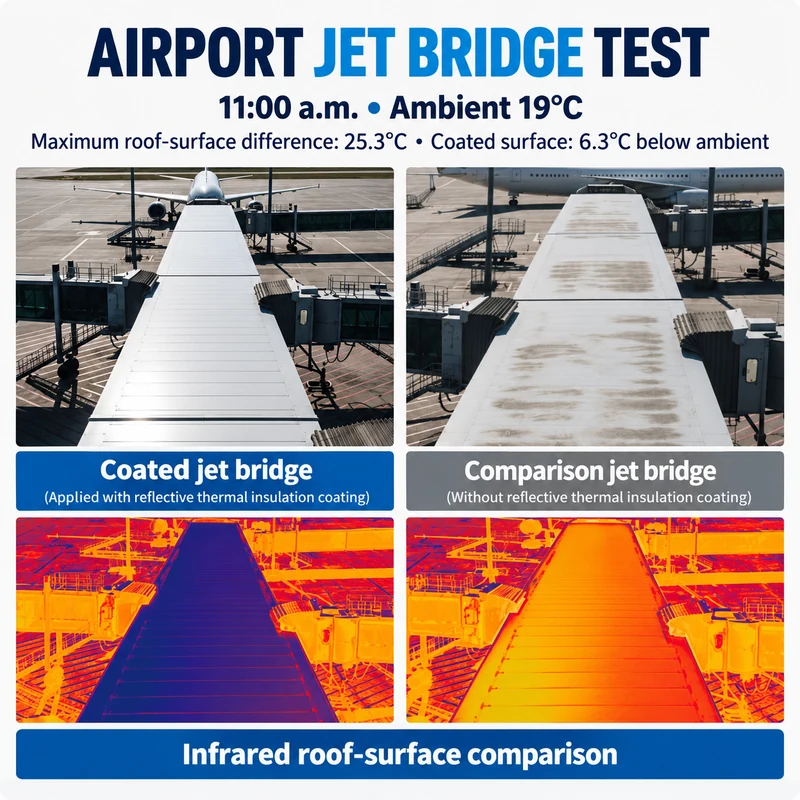
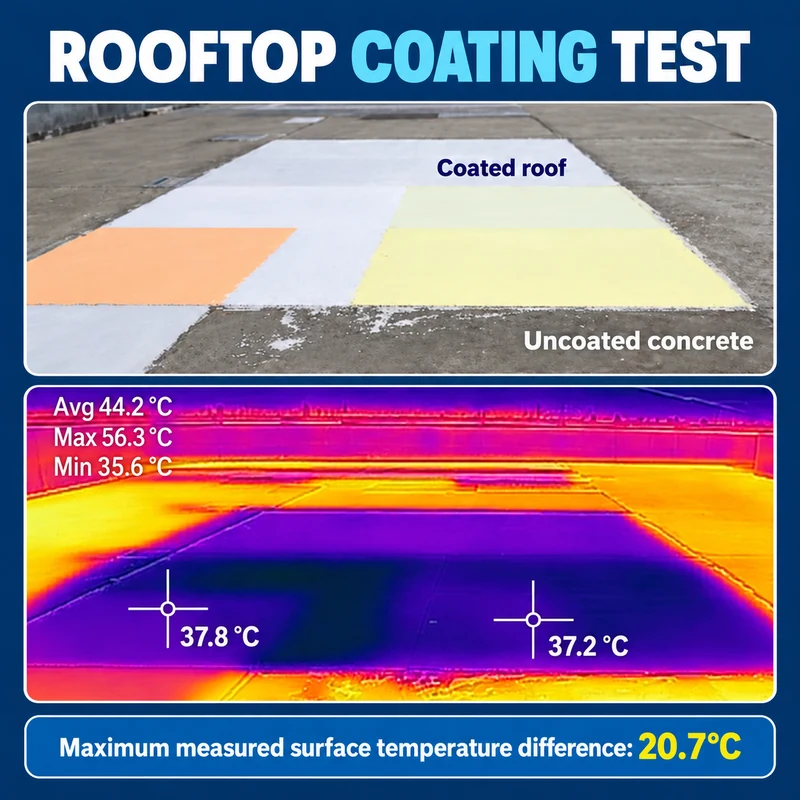
The illustrated concrete-roof comparison reports a maximum surface-temperature difference of 20.7°C. An airport jet-bridge example reports 25.3°C between roof surfaces, with the coated surface 6.3°C below an ambient temperature of 19°C at 11:00 a.m. These are specific examples, not promised temperature reductions for every building.
Preparation and recoat timing
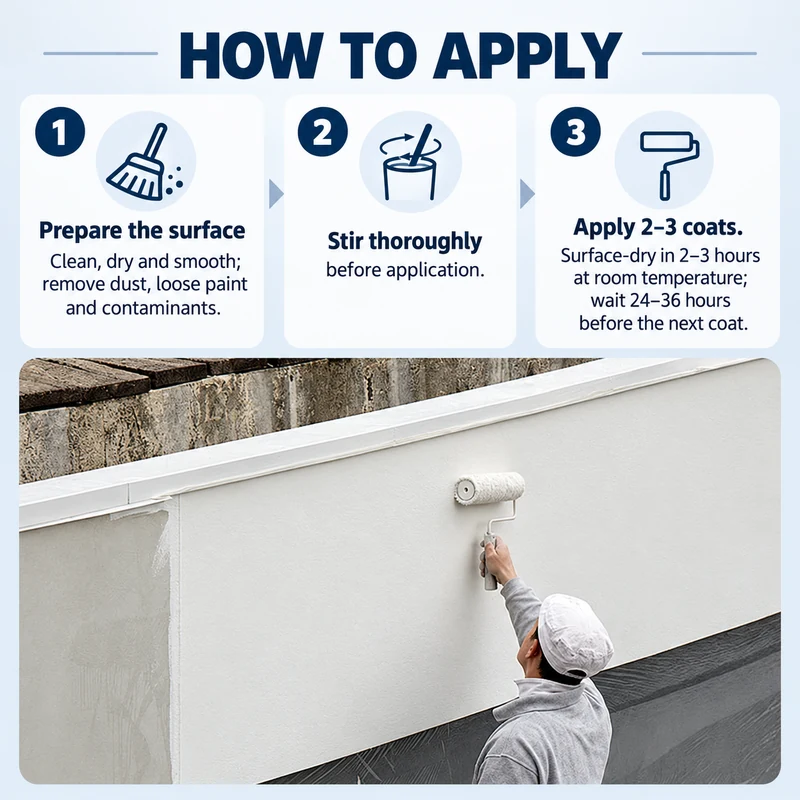
Clean the surface, remove dust and loose paint, and repair defects before application. Stir thoroughly. The illustrated method uses two or three coats, with surface drying in approximately 2–3 hours at room temperature and 24–36 hours before the next coat. Adjust the work schedule to the actual drying conditions.
Plan a representative roof trial
For a meaningful comparison, select similar adjacent surfaces with comparable exposure, construction and measurement times. Record ambient conditions, surface temperatures and coating condition. Evaluate the complete roof or enclosure requirement alongside cooling, including waterproofing and corrosion protection where needed.
Technical reference
Product specifications
Use these details alongside your substrate, application method and service conditions.
Discuss your requirements| Property | Detail |
|---|---|
| Colour | White |
| Coating type | Water-based passive radiative cooling coating |
| Suitable projects | Metal and concrete roofs, containers, grain silos and exterior building surfaces |
| Application | Brush, roller or spray as appropriate to the system |
| Reference application | 2–3 coats |
| Reference surface drying | 2–3 hours at room temperature |
| Reference recoat interval | 24–36 hours |
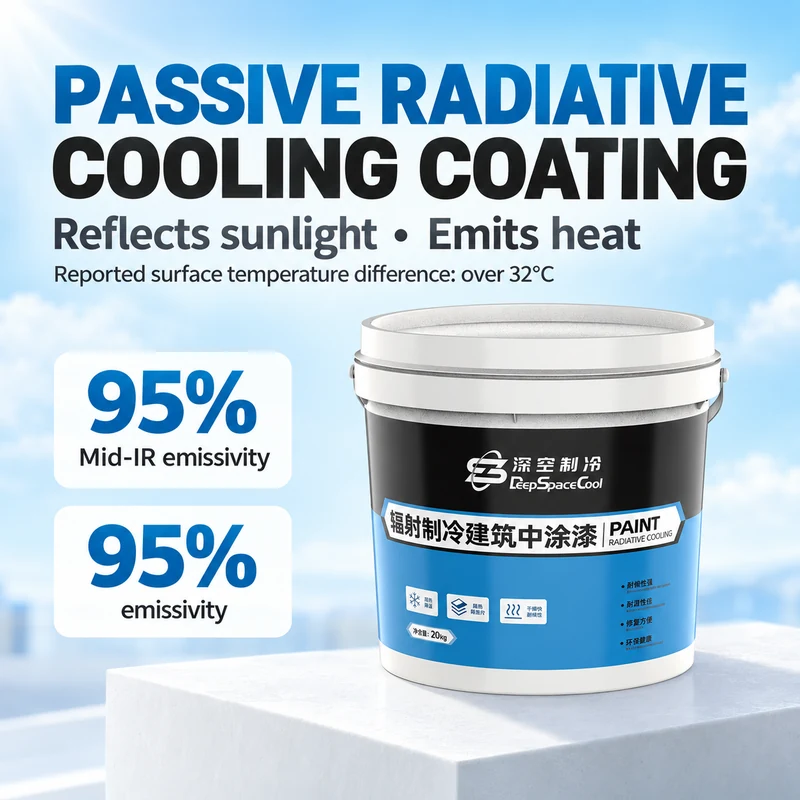
| Reported mid-infrared emissivity | Up to 95% in product information |
| Reported roof comparison | 20.7°C maximum surface-temperature difference in the illustrated rooftop test |
| Reported airport comparison | 25.3°C maximum roof-surface difference; coated surface 6.3°C below 19°C ambient at 11:00 a.m. |
Application process
Match the process to the finish
- 01
Inspect and repair
Assess the roof or enclosure, repair defects and establish whether waterproofing or corrosion protection is also required.
- 02
Prepare and prime
Clean and dry the substrate, remove loose coatings and apply the compatible primer required by the system.
- 03
Apply the cooling system
Stir the coating and apply evenly. Follow the selected system and the reference recoat interval of 24–36 hours.
- 04
Inspect and assess
Check continuity and finish. Compare temperatures under matched conditions after the coating has dried.
A closer look
Product & application gallery
Product formats, surface details and application examples.
View all 11 images
From evaluation to supply
Start with a sample.
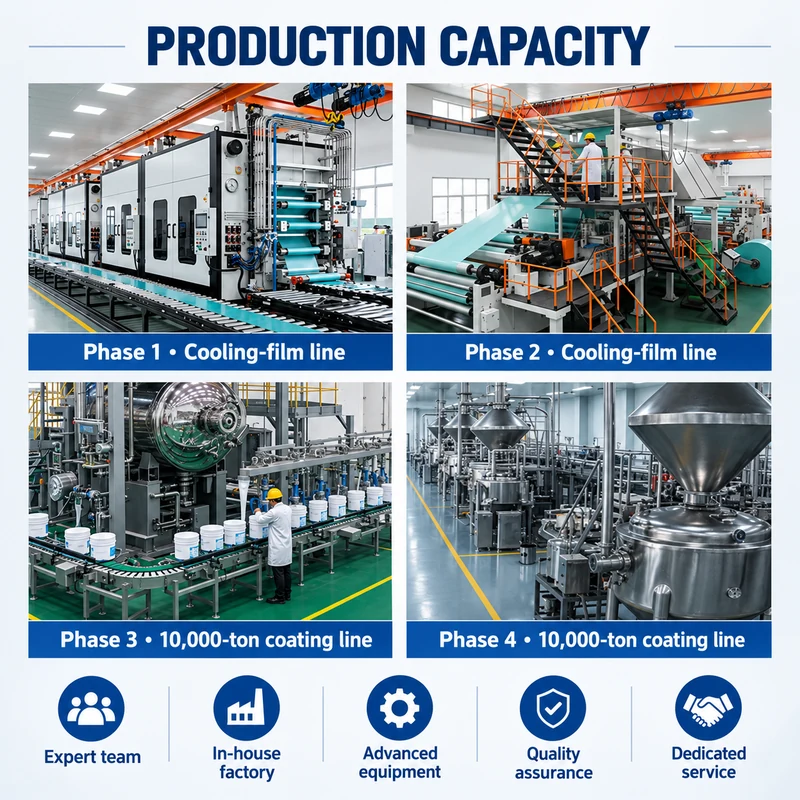
Free samples are available; the customer pays freight. Order quantities depend on the product and pack format, with flexible starting quantities discussed with sales. Typical lead time is 10–20 days after order details are confirmed. OEM and private-label requirements can be discussed with the product specification.
Frequently asked questions
Does it consume electricity?
The coating’s radiative cooling function is passive and does not consume operating electricity.
Will every roof be 20°C cooler?
No. The quoted measurements come from specific illustrated comparisons. Weather, substrate, film condition and measurement method affect the result.
Can it replace every roof waterproofing system?
Do not assume so. Select the complete roof system for its waterproofing, structural and corrosion requirements as well as cooling performance.
Discuss this product
Tell us your application, required format and quantity. We can help select a suitable sample and supply option.
- sales@leadercoat.com
- Phone & WhatsApp
- +86 151 7525 6533
- Sample support
- Free samples. Customer-paid freight.