
Water droplets on coated heat exchanger tubes
Hydrophobic Coatings
Hydrophobic Coating for Dropwise Condensation
A thin hydrophobic coating for metal heat-transfer surfaces. It is designed to support dropwise condensate behaviour, making it relevant to condenser and heat-exchanger development where surface wetting affects operation.
- Film-forming material
- Perfluoroalkyl silazane
- Pack size
- 1 kg
- Water contact angle
- 115°
Surfaces & applications
Selected copper tubes, stainless steel tube bundles and compatible metal heat-transfer surfaces in condensers and heat exchangers.
A thin surface for dropwise condensation
The material crosslinks at the metal surface to form a hydrophobic layer. Its purpose in a condensation application is to encourage condensate to form separate droplets rather than a continuous water film. Droplet movement is described by the listed 15–25° roll-off angle. Actual heat-transfer results depend on the complete operating system, including vapour, surface condition and contamination.
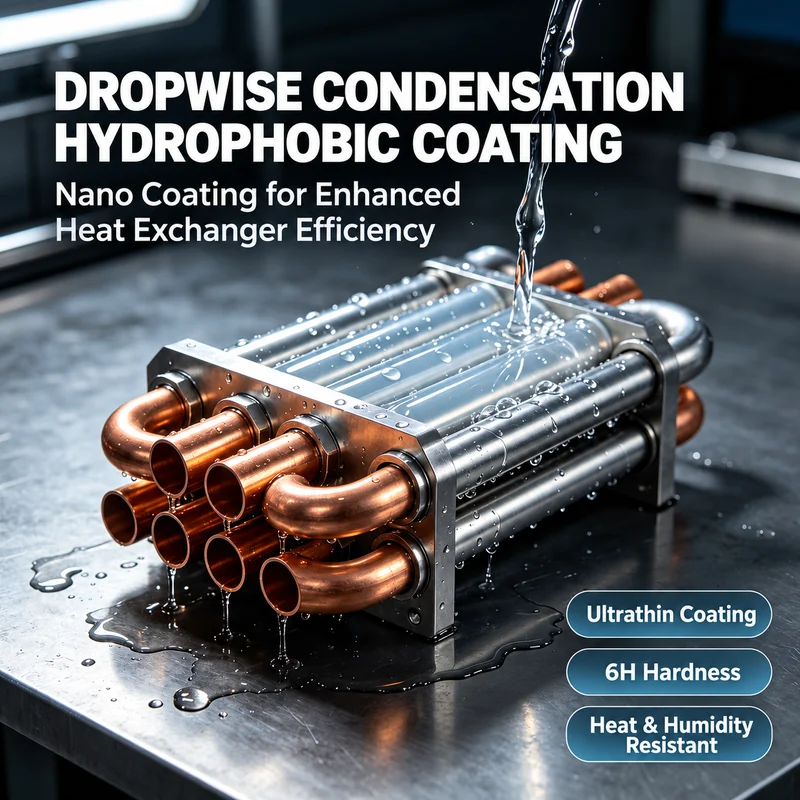
One defined set of surface values
The selected technical specification uses a water contact angle of 115°, coating thickness below 100 nm and pencil hardness above 6H. The sub-100 nm layer is intended to provide a surface function without a conventional thick lining. The abrasion reference describes an intact coating after 200 cycles with No. 0 steel wool. Keep the stated conditions with the figures when comparing samples.
Equipment and substrate selection
Application areas include shell-and-tube steam condensers, chemical waste-heat recovery exchangers, refrigeration heat-exchange tubes, evaporative cooling equipment and industrial steam heat-transfer assemblies. Copper tubing, stainless-steel bundles and carbon-steel heat-transfer parts are listed substrates. Surface preparation and the actual operating atmosphere are central to a useful trial.
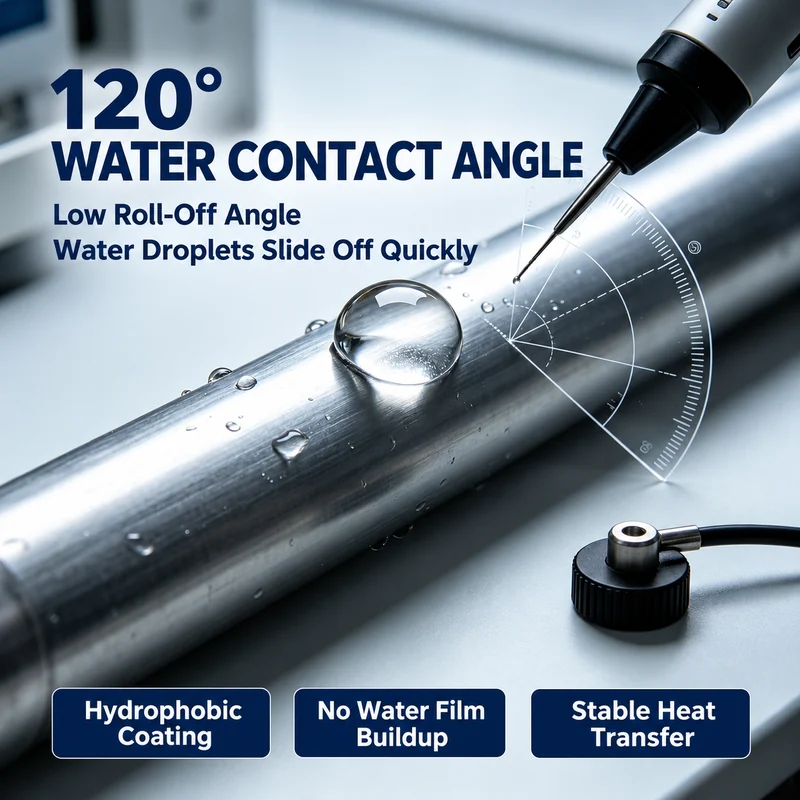
Curing routes and finished appearance
The described process uses overall dipping to apply a uniform layer. Room-temperature film formation suits small batches, while controlled heat curing can be considered for production lines. After curing, the intended surface is a uniform transparent film without local build-up. Include tube ends, drainage paths and areas that are difficult to inspect in the process review.
Performance in the operating system
The technical information lists 220°C and 85% humidity figures. The heat, humidity, pressure and condensate conditions of the actual equipment should be evaluated together rather than assumed equivalent to a single laboratory condition. Compare treated and untreated surfaces under consistent duty and include cleaning cycles when assessing retained performance.
Continue Your Selection
Technical reference
Product specifications
Use these details alongside your substrate, application method and service conditions.
Discuss your requirements| Property | Detail |
|---|---|
| Film-forming material | Perfluoroalkyl silazane |
| Pack size | 1 kg |
| Coating thickness | <100 nm |
| Pencil hardness | >6H |
| Water contact angle | 115° |
| Droplet roll-off angle | 15–25° |
| Abrasion reference | 200 cycles with No. 0 steel wool; coating remaining intact |
| Listed heat / humidity figures | 220°C and 85% humidity; evaluate the actual operating duty |
| Application | Dip coating |
| Cure options | Room-temperature film formation or controlled heat curing |
Application process
From surface preparation to performance
- 01
Prepare the metal
Remove oil, rust and contamination and dry the surface.
- 02
Dip uniformly
Coat the complete target surface and allow excess material to drain.
- 03
Cure
Use the selected room-temperature or heat-curing process appropriate to the production setup.
- 04
Inspect
Check the transparent film for uniformity, deposits and uncoated areas.
- 05
Evaluate in service conditions
Assess wetting, adhesion and heat-transfer duty using the actual operating and cleaning conditions.
Remove oil, corrosion and contamination from the metal. Apply a uniform coating, drain excess material and cure using the specified process. Evaluate condensate behaviour and heat-transfer performance using the actual vapour, temperature, flow and cleaning conditions.
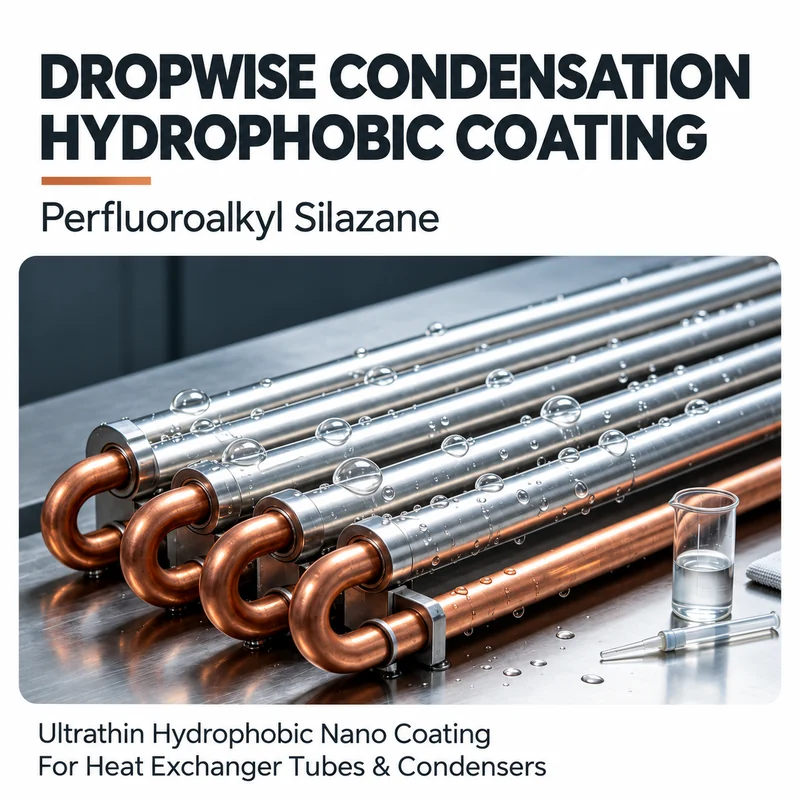
A closer look
Product & application gallery
Product formats, surface details and application examples.
From evaluation to supply
Start with a sample.
Free samples are available; freight is paid by the customer. Order quantities vary by product and packaging. Many bulk coatings start at approximately 50 kg; contact sales for a flexible starting quantity. The usual order lead time is 10–20 days after details are confirmed, with shipping time additional. Include OEM requirements in your enquiry.
Frequently asked questions
Can a water contact angle predict the heat-transfer gain?
No. Contact angle describes wetting on the tested surface. Heat-transfer performance also depends on geometry, condensate removal, flow, fouling and operating conditions.
Can it be applied after an exchanger is assembled?
Access, cleaning, coating coverage and curing must be considered. Share the assembly details so the application route can be assessed.
Which contact-angle value applies to this specification?
115° is the selected water contact angle, with a droplet roll-off angle of 15–25°.
What metals are listed?
Copper, stainless steel and carbon-steel heat-transfer surfaces are listed.
Does the coating provide a fixed energy-saving percentage?
No fixed percentage is specified here. The equipment-level result depends on operating conditions and should be measured under a consistent comparison.
Discuss this product
Provide tube material, geometry, operating temperature, vapour composition, condensate conditions, cleaning cycle and the performance comparison required.
- sales@leadercoat.com
- Phone & WhatsApp
- +86 151 7525 6533
- Sample support
- Free samples. Customer-paid freight.