
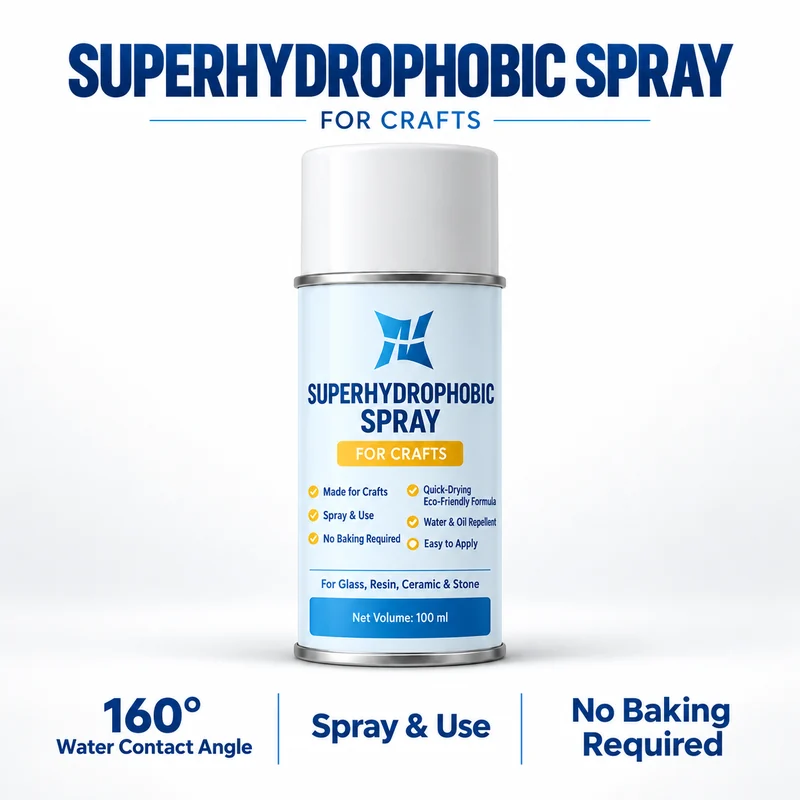
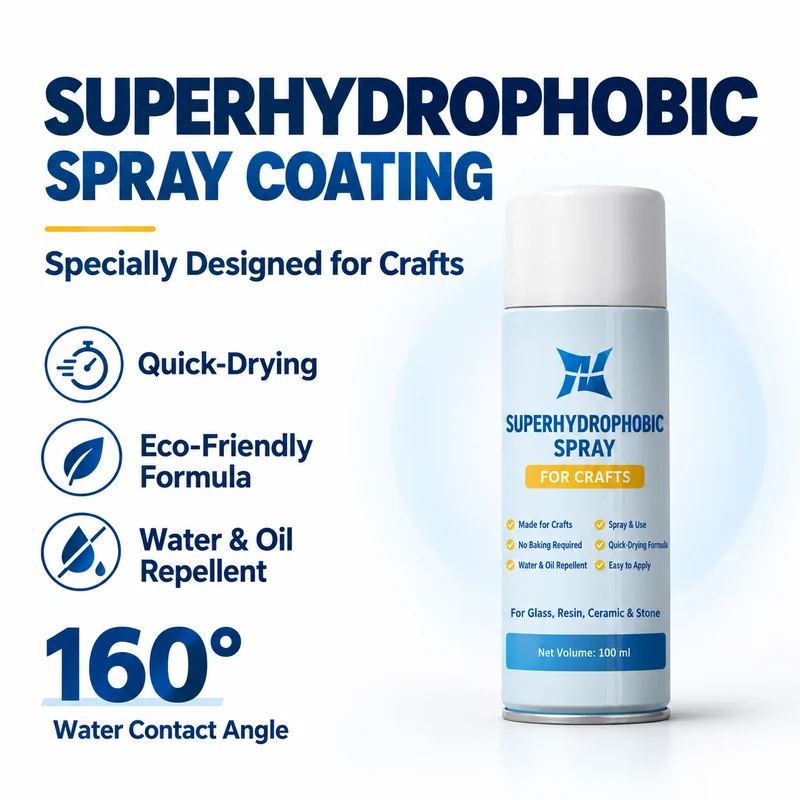
100 ml craft coating aerosol can
Hydrophobic Coatings
Superhydrophobic Spray Paint for Crafts
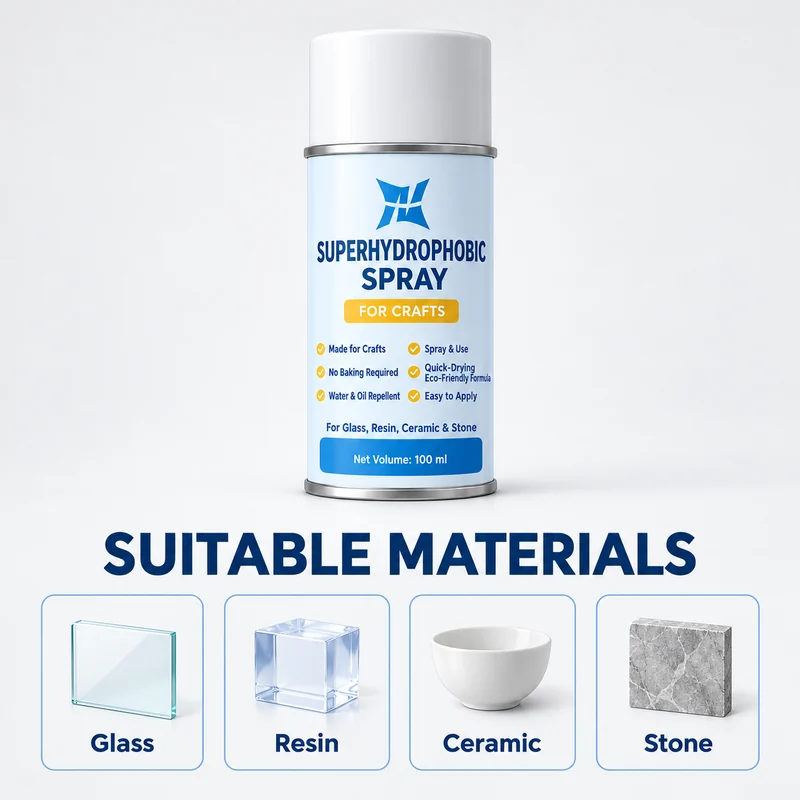
An aerosol surface coating for selected glass, resin, ceramic and stone craft objects. It provides a convenient format for evaluating water-repellent decorative surface protection without a separate spray system.
- Pack size
- 100 ml aerosol
- Water contact angle
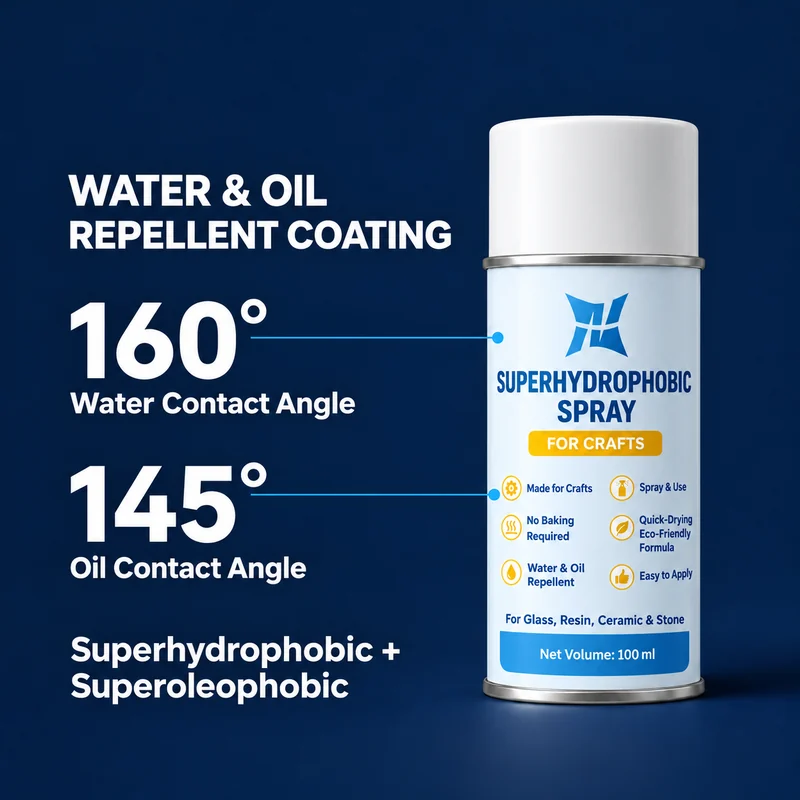
- 160°
Surfaces & applications
Decorative resin pieces, ceramic ornaments, glass craft surfaces and stone objects compatible with the coating.
Water- and oil-repellent treatment for crafts
This aerosol is intended for decorative objects where a thin functional surface is preferred to a heavy protective finish. Glass ornaments, resin figures, ceramics, stone crafts and compatible hard-metal decorations are among the listed applications. The specified surface values are a 160° water contact angle and a 145° oil contact angle.
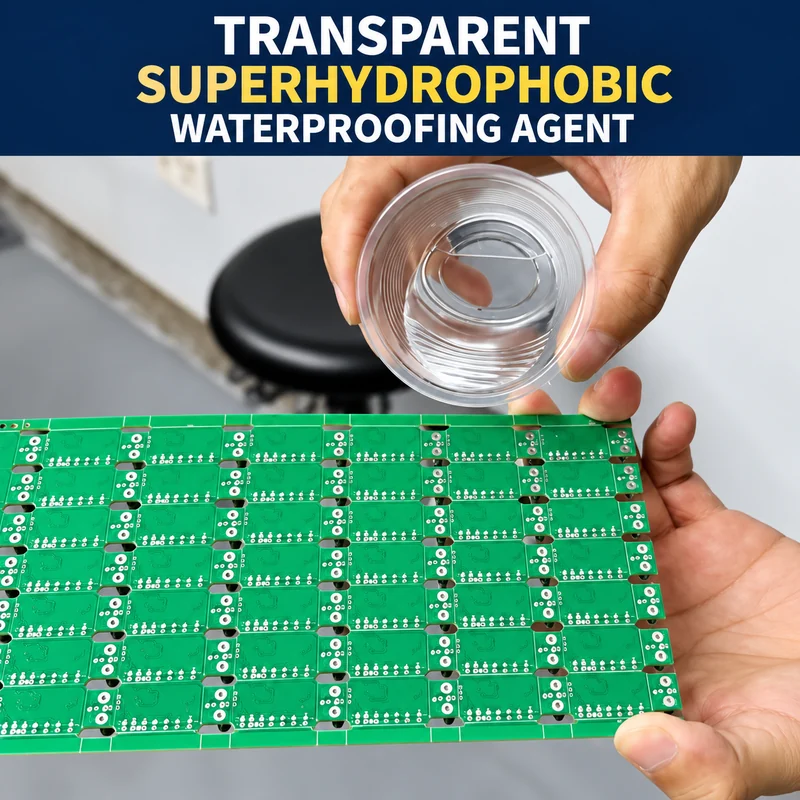
A controlled spray sequence
Shake the can vigorously for 1–2 minutes, then spray from 15–20 cm using two or three thin coats. Allow 30–60 seconds between coats. A single heavy application can cause runs, whitening or wrinkling and can change the appearance of a decorative surface. Keep the work moving through light passes and inspect under the intended display lighting.
Allow 60 minutes before demonstrating the effect
Use 60 minutes at room temperature as the effect-development reference after spraying. The coating does not need oven baking. Leave it longer where improved handling durability or complete curing is needed, and avoid immediate water, oil, touching or rubbing. A visually strong beading effect should not be mistaken for unlimited abrasion resistance.
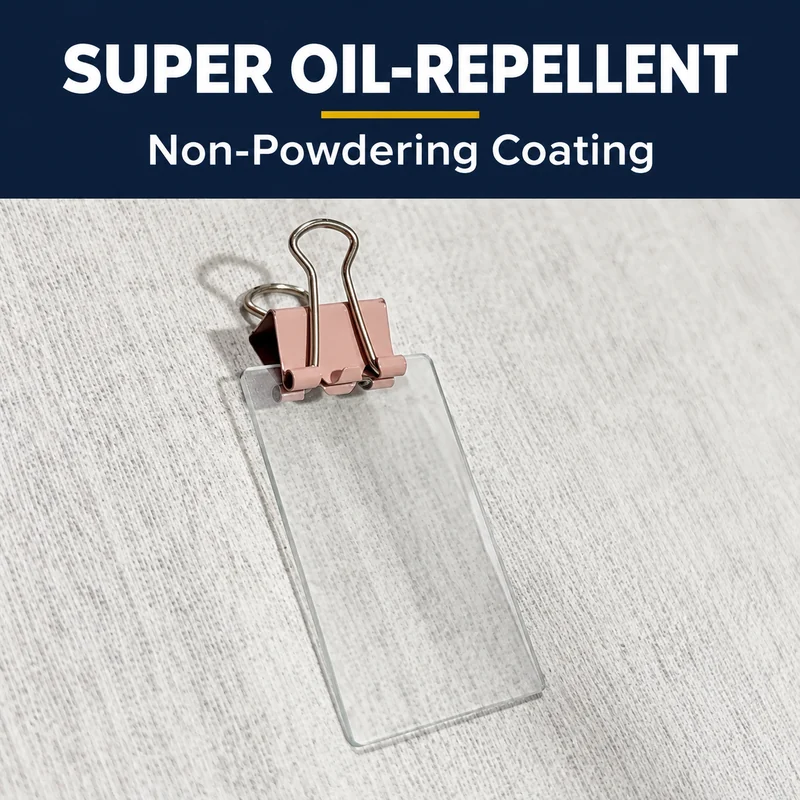
Surface compatibility and appearance
Old paint and soft plastics need a small compatibility test. Elastic rubber and easily solvent-attacked plastics are outside the recommended starting scope. The film is intended to have low haze when applied thinly, but excessive build can whiten the appearance. Approve the result on the actual object before a decorative production batch.
Care of the coated object
The thin functional layer is intended for everyday water, oil and dust-related protection. Repeated hard rubbing can wear the layer away, so cleaning should preserve the coating rather than abrade it. Keep the aerosol away from ignition sources and high heat, use a well-ventilated area, and follow the supplied handling information.
Continue Your Selection
Technical reference
Product specifications
Use these details alongside your substrate, application method and service conditions.
Discuss your requirements| Property | Detail |
|---|---|
| Pack size | 100 ml aerosol |
| Water contact angle | 160° |
| Oil contact angle | 145° |
| Effect development | 60 minutes after spraying at room temperature |
| Curing | Room temperature; no baking required |
| Can shaking | 1–2 minutes before spraying |
| Spray distance | 15–20 cm |
| Coats | Two or three thin coats |
| Interval between coats | 30–60 seconds |
| Recommended surfaces | Glass, resin, ceramic, stone and compatible hard-metal craft objects |
Application process
From surface preparation to performance
- 01
Prepare
Remove dust, oil and water marks and dry the object. Test sensitive paint or plastics.
- 02
Shake
Shake the aerosol for 1–2 minutes.
- 03
Spray lightly
Hold 15–20 cm away and apply two or three thin coats at 30–60 second intervals.
- 04
Leave undisturbed
Place in a clean area at room temperature for at least 60 minutes before checking the surface effect.
- 05
Assess and protect
Check clarity and beading, allow further curing before demanding handling, and avoid abrasive cleaning.
Clean and dry the object, then test a small area for colour and gloss change. Shake the can and apply thin, even passes. Allow the coating to cure before evaluating liquid beading or handling durability. Use in a ventilated area and follow the can’s handling instructions.
A closer look
Product & application gallery
Product formats, surface details and application examples.
From evaluation to supply
Start with a sample.
Free samples are available; freight is paid by the customer. Order quantities vary by product and packaging. Many bulk coatings start at approximately 50 kg; contact sales for a flexible starting quantity. The usual order lead time is 10–20 days after details are confirmed, with shipping time additional. Include OEM requirements in your enquiry.
Frequently asked questions
Will it change the appearance of a craft object?
Gloss and colour can change with substrate, thickness and lighting. Check a representative sample before treating a finished piece.
Is it suitable for flexible rubber or solvent-sensitive plastics?
Elastic rubber is not recommended. Test old paint and solvent-sensitive plastics on a small representative area before wider application.
Should I wait 30 or 60 minutes?
Use 60 minutes after spraying as the effect-development reference for this product.
Why does a sprayed surface turn white?
Excessive wet build can cause whitening. Use two or three thin coats and test the appearance on the actual object.
Can it be baked to speed up use?
The stated craft application is a room-temperature process and does not require baking.
Is the coating suitable for soft rubber?
Elastic rubber and easily solvent-attacked plastics are not recommended starting surfaces.
Discuss this product
Tell us the craft material, surface finish, object size, expected handling and preferred order quantity in cans or cartons.
- sales@leadercoat.com
- Phone & WhatsApp
- +86 151 7525 6533
- Sample support
- Free samples. Customer-paid freight.