
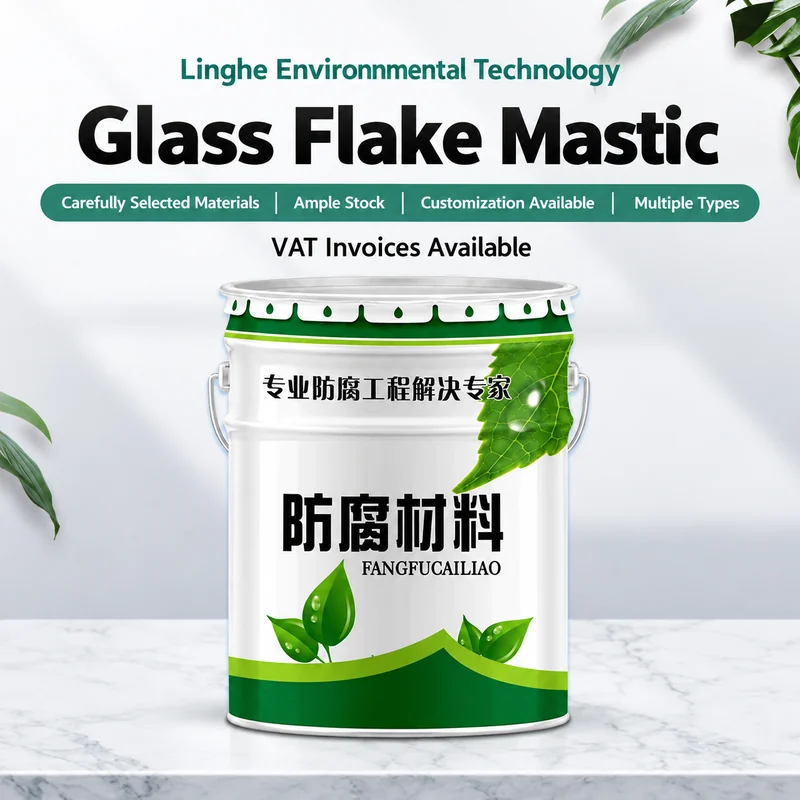
White and green anti-corrosion material pail
Medium-Temperature Vinyl Ester Glass Flake Mastic
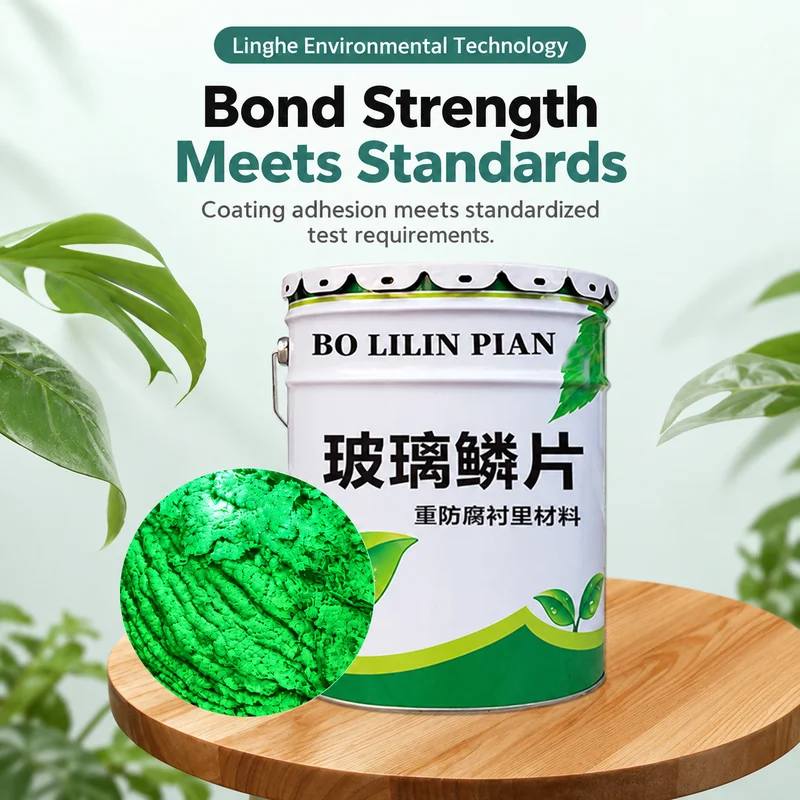
A glass-flake-filled vinyl ester mastic for industrial corrosion-protection systems. The mastic format is selected for building a protective lining on appropriately prepared substrates, with the resin system matched to the service environment.
- Product form
- Mastic for an industrial protective lining
Free samples · Customer-paid freight · Flexible order quantities
Surfaces and applications
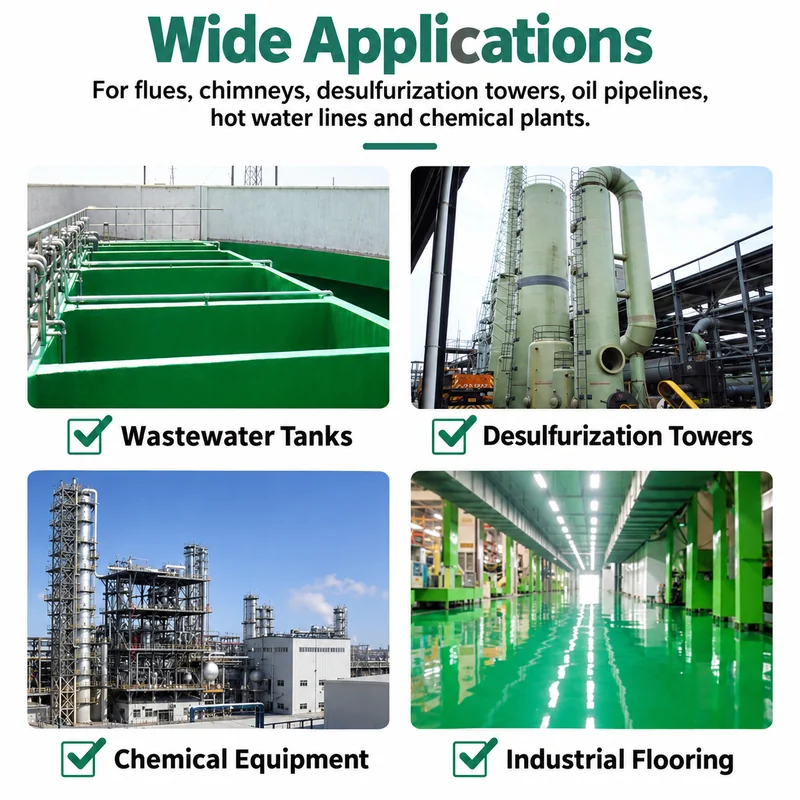
Selected desulfurisation equipment, flue-gas ducts, process vessels and corrosion-protection work on steel or concrete.
How the glass-flake barrier works
The material combines vinyl ester resin with plate-like glass flakes and functional additives to form a mastic. In the applied lining, overlapping flakes lengthen the route a penetrating medium must follow through the resin. The useful result is a barrier layer whose performance depends on resin selection, film continuity, application thickness and the condition of the underlying substrate.
Where the lining is used
Application areas include flues, chimneys, desulfurisation towers, chemical equipment, tanks and selected industrial structures. Steel and concrete structures in power generation, smelting and chemical or fertiliser processing can present different combinations of vapour, condensate, splash and liquid exposure. Identify which surfaces are continuously wetted and which encounter occasional contamination, cleaning or thermal cycling.
Layer arrangement and local reinforcement
A complete lining specification identifies the primer, mastic layer or layers, any reinforcement and the finishing coat. Corners, welds, nozzles, changes in geometry and areas of abrasion deserve separate attention. The material information describes conventional, reinforced and wear-resistant arrangements; the appropriate arrangement is selected around the actual equipment rather than assumed from the mastic name.
Application and inspection details
Before application, remove contamination and achieve the surface condition required by the chosen system. Check steel defects and concrete condition, then apply compatible layers in the specified sequence. Mixing, working time and cure requirements belong to the selected vinyl ester supply. Inspect coverage, thickness and local details before service. Any continuity or other acceptance tests should match the lining system and project specification.
What makes a useful project enquiry
Include drawings or photographs, the total lining area, substrate, chemical names and concentrations, normal and peak temperatures, immersion or splash exposure and the required shutdown window. State whether the enquiry covers material only or a complete specified layer system. This information is particularly useful when comparing a new lining with a repair to an existing surface.
Continue Your Selection
Anti-Corrosion Coatings · Industrial Corrosion Protection · What to Include in a Glass Flake Coating Enquiry · Glass Flake Mastic and Glass Flake Coating: Comparing Their Roles
Technical and supply details
| Property | Detail |
|---|---|
| Resin family | Vinyl ester |
| Reinforcement | Flake-shaped glass filler |
| Product form | Mastic for an industrial protective lining |
| Application substrates | Prepared steel and compatible concrete structures |
| System role | Barrier lining within a specified primer, mastic and finishing system |
| Service selection | Chemical medium, concentration, temperature and exposure mode assessed together |
| Typical industries | Flue-gas treatment, chemical processing, wastewater handling and industrial maintenance |
Prepare. Apply. Evaluate.
- 01
Define the duty
List the chemicals, concentrations, exposure modes and temperature cycle.
- 02
Prepare the substrate
Remove oil, loose coating and corrosion products and establish the required surface condition.
- 03
Apply the system
Use the agreed primer, mastic, reinforcement and finish sequence, including detail treatment around edges and welds.
- 04
Cure
Keep the lining under the selected product's required curing conditions before chemical exposure.
- 05
Inspect
Verify the specified coverage, thickness and acceptance criteria before returning the equipment to service.
Define the substrate preparation, primer, lining thickness and finishing layer as one system. Apply according to the selected product instructions and inspect the completed lining before service. Chemical identity, concentration, temperature and exposure cycle are essential to material selection.
Product and application gallery
Samples and ordering
Free samples are available; freight is paid by the customer. Order quantities vary by product and packaging. Many bulk coatings start at approximately 50 kg; contact sales for a flexible starting quantity. The usual order lead time is 10–20 days after details are confirmed, with shipping time additional. Include OEM requirements in your enquiry.
Frequently asked questions
Is medium-temperature a universal numerical limit?
No. The allowable service conditions depend on the selected resin grade, chemical exposure and lining system.
How does mastic differ from glass flake coating?
Mastic is chosen for its lining build and application consistency. The coating product has a different application format; select the two by system role and the project specification.
What does medium-temperature mean for selection?
It identifies the product family. The allowable duty must be selected against the actual chemical and temperature combination, rather than assigning one temperature to every medium.
Can it be used on concrete?
Compatible prepared concrete structures are part of the application scope. The concrete condition, moisture and primer arrangement need to be addressed in the lining specification.
Is reinforcement always the same?
No. Conventional, locally reinforced and wear-resistant arrangements address different equipment details and exposure. The chosen layer arrangement should be stated in the project enquiry.
Discuss this product
Provide the equipment drawing or area, substrate, service chemicals and concentrations, normal and peak temperatures, immersion conditions and project specification.
- sales@leadercoat.com
- Phone & WhatsApp
- +86 151 7525 6533
- Sample support
- Free samples. Customer-paid freight.