
Start with the shape
A flat, accessible panel can be straightforward to cover with a sheet. Curves, recesses and irregular parts may be easier to cover with a liquid, provided the coating reaches the required areas and can later be removed. Consider edges, holes, joins and the place where peeling will begin. A continuous-looking film can still have thin areas around sharp geometry.
Compare the complete process
Liquid coatings need an application and drying stage. Sheet films need cutting, positioning and fitting. Compare the complete production sequence rather than only the time at the spray gun or roll dispenser. Include masking, drying space, inspection, handling, packing and removal. The available process may matter as much as the surface shape.
Check the original finish
Both methods need compatibility with the actual surface. Test on the same paint, lacquer, plating, glass treatment or plastic used in production. Inspect colour, gloss, residue and the condition of the finish after the expected protection period. New or weak paint and porous materials deserve particular attention.
Trial removal after realistic exposure
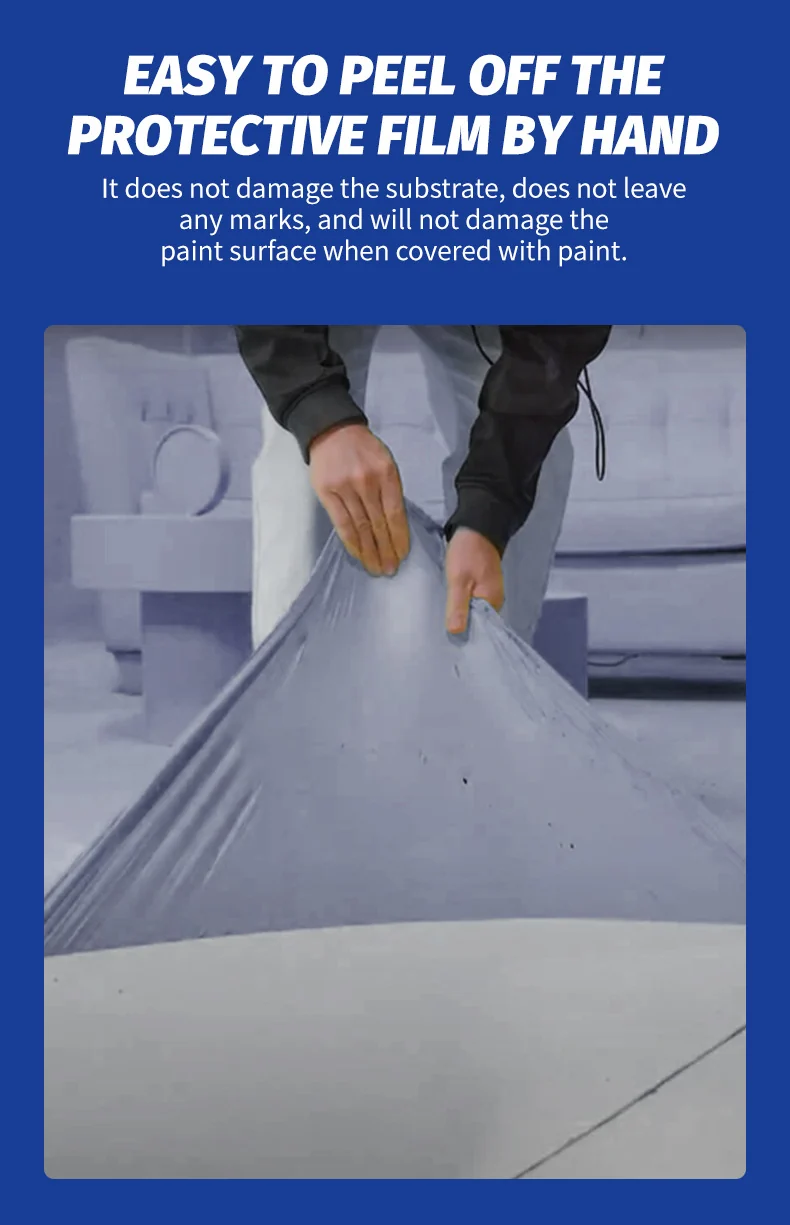
A freshly coated sample does not reproduce months of storage, heat or transport. Include the planned exposure, packing contact and removal method in the trial. Record where the film tears or leaves difficult-to-reach fragments. Choose the protection method that fits both application and removal, then confirm the packaging and quantity required for the job.
A comparison that includes the production floor
Question | Liquid peelable coating | Adhesive protective film |
|---|---|---|
How does it reach the surface? | Applied wet by a method suited to the grade and part | Cut and fitted as a sheet or roll |
What needs space or time? | Application, drying and protected handling | Cutting, fitting and pressing into place |
Where are difficult details? | Thin edges, recesses, drainage and removal access | Curves, joints, wrinkles and complex cut-outs |
What must be checked after exposure? | Film continuity, peel, residue and original finish | Adhesive residue, lifting and original finish |
What determines material use? | Area, coats, film build, surface and process loss | Area, overlap, offcuts and fitting pattern |
Use this comparison to structure a trial. Neither format has one universal consumption or compatibility figure.
A material estimate for a trial panel
For the general water-based latex coating, the one-coat reference is 4–6 m²/kg. As an illustrative calculation, a 12 m² area would require approximately 2–3 kg for one coat before losses. If the approved process needs two comparable coats, the initial estimate becomes 4–6 kg before losses. This calculation uses that product's reference only; it should not be applied to the shipping grade or another peelable formulation. Weigh actual consumption during the trial and include edges, equipment retention and overspray.
Keep the comparison fair
Give both protection methods the same substrate, exposure period and packing contact. Inspect the initial application and then repeat inspection after removal. Record minutes per part as well as the material used, and note whether either method requires special cleaning at the end. A process that protects the flat panel but leaves a critical edge exposed has not completed the same job as one that protects the entire specified area.
Questions to resolve before purchase
Which areas must remain uncoated? How long will the protection stay on? Will packing materials press against it? Where will removal begin, and can the operator reach all protected areas? Does the original finish tolerate the product through the full exposure period? Send these answers with the component photographs and estimated quantity to select a useful sample.
Related Products
Water-Based Peelable Latex Coating
Peelable Protective Coating for Irregular-Shaped Parts
Peelable Protective Coating for Renovation
Peelable Shipping Protection Coating for Furniture and Appliances